
This article is part of Fintech Leaders, a newsletter with 90,000+ builders, entrepreneurs, investors, regulators, and students of financial services. I invite you to share and sign up. If you enjoy this conversation, please consider leaving a review on Apple, Spotify, or Youtube.
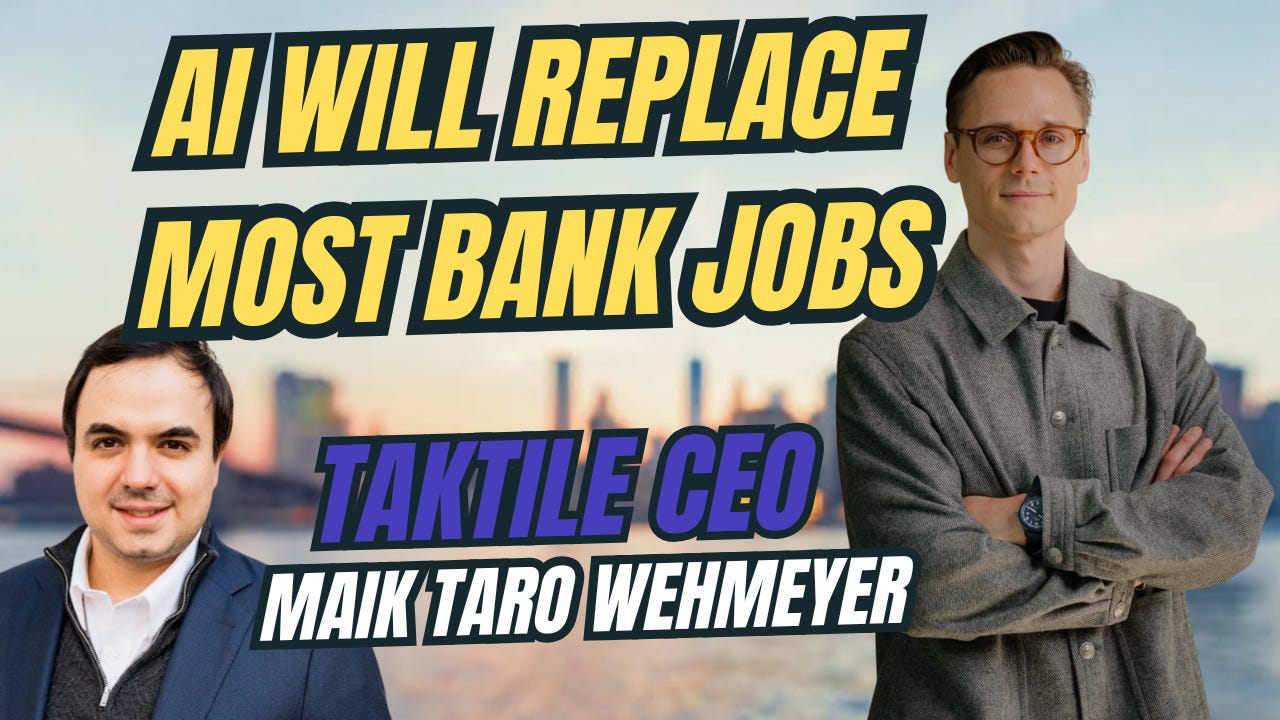
I sat down with Maik Taro Wehmeyer, Co-Founder and CEO of Taktile, an agentic decision platform built specifically for financial services. Taktile combines a decision engine, a data marketplace, and an agent platform so that banks, fintechs, and insurance companies can automate their most consequential decisions: onboarding, KYC, credit underwriting, fraud, and transaction monitoring. The company now serves customers across 27 countries, with product and engineering based in Berlin, London, and Romania, and headquarters in New York. They recently raised a $120 million Series C led by Goldman Sachs.
We discussed the pivot that nearly buried the company, why Maik believes AI agents can now beat humans at tasks that failed for three straight years, where he still insists on keeping a human in the loop and where he thinks that requirement disappears within a few years, his hiring philosophy built around a single value he calls mind the diamonds, the fundraising psychology he picked up from his wife’s years as a venture capitalist, and of course, the 300-pound bronze lobster his team dropped in front of the Wall Street bull with no permit and no explanation.
Outside of Taktile, Maik was a competitive sprinter for the German national track and field team before an injury redirected him toward academia and then engineering, and he is, by his own admission, one of the more serious sauna enthusiasts operating in fintech today.


From a Failed MLOps Product to an Agentic Decision Platform
Back in 2020, Taktile’s first product was a horizontal, developer first MLOps platform aimed at machine learning engineers and data scientists inside banks and fintechs. It was a reasonable bet, but after Amazon, Google, and Databricks all shipped comparable tooling, Taktile’s product became nearly impossible to sell and 99 of 100 banks they pitched said no.
The successful pivot came from listening to the few customers who did say yes. Credit and fraud teams at those early fintech and bank customers kept asking for the same thing: a no code, low code environment layered on top of the machine learning models, so a credit analyst who could not write code could still deploy and adjust decision logic. Those same customers then asked whether Taktile could also build a data marketplace to plug in bureau and other third party data. Over time, those requests reshaped the company into what it is today, a decisioning platform built around three connected pieces: (1) a decision engine, (2) a data marketplace, (3) and an agent platform, sold specifically into fintechs, banks, and insurance companies.
The go-to market shifted just as much as the product did. The company’s first act was product led growth, developer first, the kind of company that lives on Reddit talking about its own tooling. What Taktile does today is closer to Palantir’s own playbook: a white glove, forward deployed motion where small teams fly in and do not leave until an implementation is done. In fact, it’s this heavy, in person motion that has become central to the company’s growth.
Why Taktile Still Keeps a Human in the Loop, For Now
Much of our conversation centered on where AI agents can be trusted to operate without a human checking their work, and where they cannot. To understand where this technology is today, Maik draws a sharp distinction between automating a task and automating a decision. A regulator does not care whether an AI agent reads a financial statement or a balance sheet during underwriting. That is a task. What the regulator does care about is the final credit decision itself, and for that, Maik explains you still need a human, particularly for a use case like AML (Anti-Money Laundering), where regulators explicitly expect a person to review flagged activity, or for high dollar lending decisions, where a bad default can cost a bank millions.
The clearest example of where the technology has changed is financial spreading for SMB underwriting, a task Taktile’s team tried and failed to automate with AI agents for three straight years since large language models first became commercially available. The problem was not text or speech, it was structured, numerical data: reading a balance sheet, a cash flow statement, and a financial statement accurately enough to spread the numbers correctly. Nothing worked, until the team tried again over the 2025 Christmas break using Anthropic’s Opus 4.5 model, and it suddenly did. Maik calls it the single biggest driver of acceleration for the company over the past six to nine months, and describes agents now outperforming human analysts on that specific task.
That said, this capability jump has not eliminated the trust gap. Maik argues there are very few tasks left where an AI agent cannot beat a human outright, and that the real obstacle to full adoption in banking is not technical capability but institutional trust. Banks are heavily regulated and cannot afford to make mistakes, so a large part of Taktile’s own sales process now involves education: showing bank executives real data on how agents perform on specific tasks, rather than simply pitching the platform.
When it comes to AI anxiety within Taktile’s ranks, Maik says the mood remains more excited than anxious, because AI has made the existing team more productive rather than replacing anyone. Instead, Taktile has included AI usage into performance reviews. Every manager tracks how much AI each employee is using, and low usage counts against an employee at review time. Though the company does not track raw token spend as a vanity metric, but instead they focus on productivity.
How a 300 Pound Bronze Lobster Ended Up in Front of the Wall Street Bull
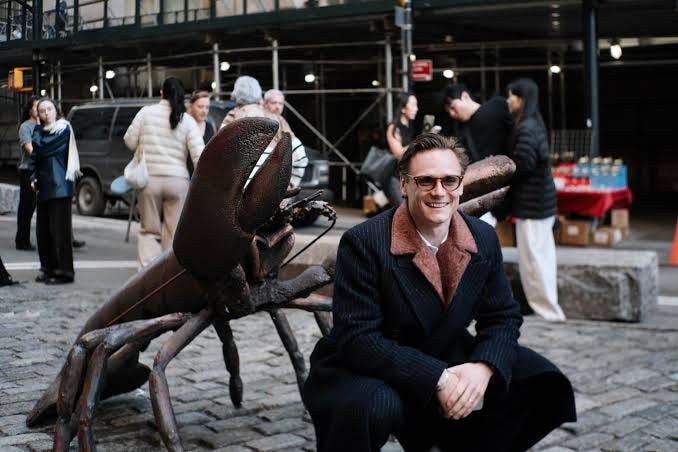
In one of the more unusual startup marketing stories of 2026, Taktile commissioned an artist to build a 300 pound bronze lobster and placed it directly in front of Wall Street’s Charging Bull statue (with no permit and no public explanation). The idea began as an attempt to launch Taktile Labs, the company’s internal research institute focused on building evals and benchmarks specific to financial services use cases like SMB underwriting and KYC, categories that had no equivalent to the general purpose benchmarks labs like OpenAI publish for things like bar exam performance.
At that time, OpenClaw, the open source AI agent, had exploded in popularity and had been drawing criticism over potential security vulnerabilities. Taktile’s pitch to the market was the inverse: bringing AI into banks safely. The lobster, placed nose to nose with the bull, was meant to visually stage that exact tension, AI security risk facing off against the financial establishment.
The team placed the statue in the morning with no announcement and simply waited. Within a day, the internet had generated 20 million views on Twitter debating who was behind it, whether it was OpenAI, whether it was OpenClaw itself, with national media including Fox News covering the mystery. The next day, Taktile claimed it. The stunt delivered exactly what Taktile wanted: spark industry conversation about how ready financial services actually is for AI agents, a question Taktile now tries to answer directly through the evals and benchmarks Taktile Labs builds for bank executives. The lobster now lives in the company’s office.
Book Recommendation
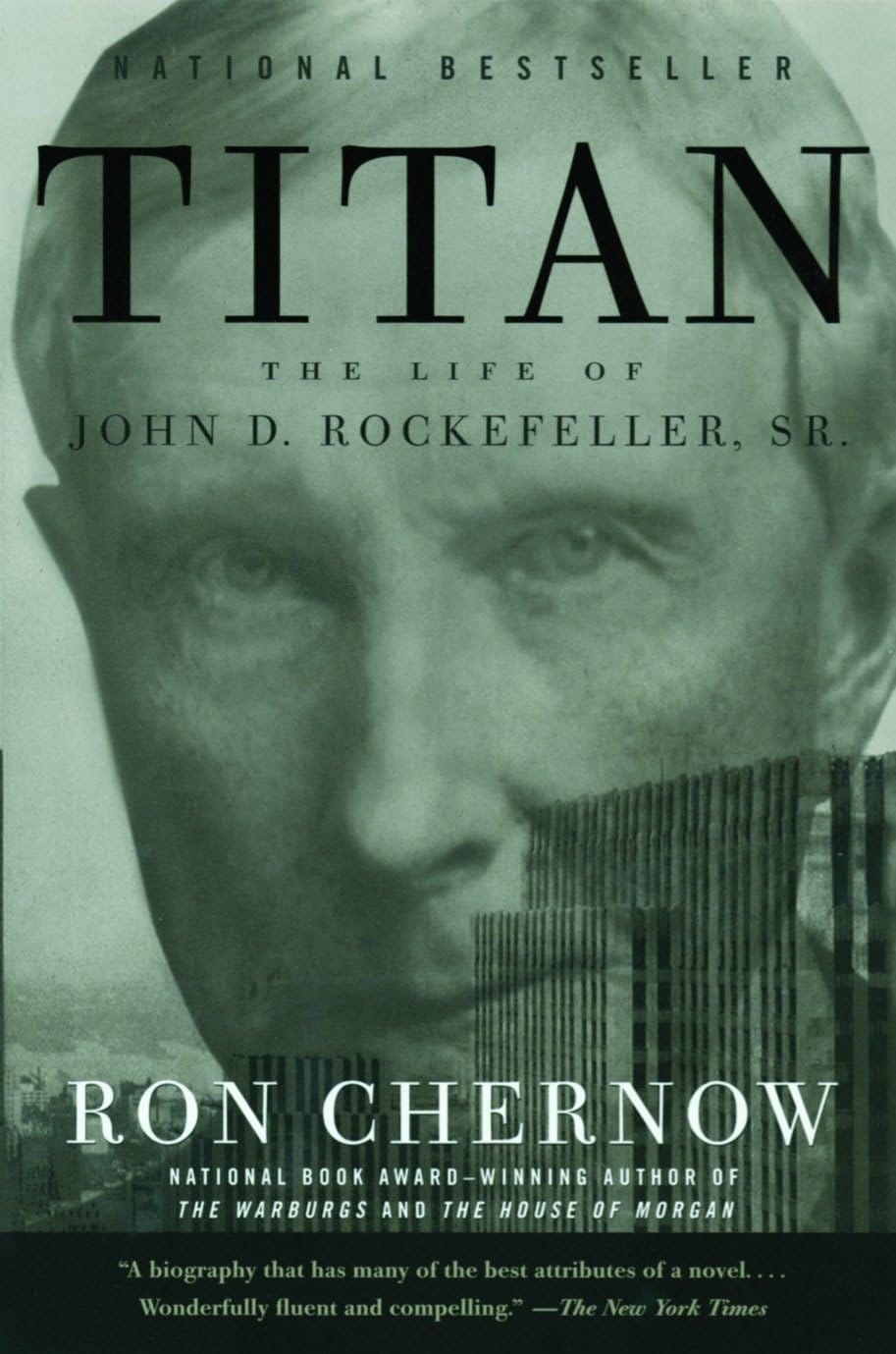
Titan by Ron Chernow. Maik says he generally gravitates toward biographies, and pointed to this one, the roughly 800-page account of John D. Rockefeller, as a standout. He calls it a genuinely fun read and a real lesson in hardship, watching one entrepreneur shape an entire industry in the early days of the American economy. I have also read it and highly recommend it!


The Unfiltered Q&A with Maik Taro Wehmeyer
Miguel Armaza: Before we get into Taktile, because that’s super interesting, I think it’s also interesting to learn how you first got involved in financial services, because I understand it was very early, maybe first grade, elementary school.
Maik Taro Wehmeyer: Yeah, it’s actually thanks to my grandpa. He dealt with stock a bit, and he always wanted to raise us thinking about different markets. He bought a few stocks for us when we were kids. I’m from Dortmund in Germany, we have a soccer club called Borussia Dortmund, that’s probably the most thing people know about it, and we were playing on the streets with the other kids from the neighborhood. Every once in a while, he’d come to his terrace and start screaming, “Microsoft is up 5 percent,” and no one had any clue what that meant. But we were cheering, we were loving it, and I got excited about rising stock prices early on. That was probably the first touch point. Then I became an engineer, so that went away from the financial markets for a while, and then with Taktile it all came back.
Miguel Armaza: Did that stay with you, the stock trading, or did it happen early on and then you kind of forgot about it until college?
Maik Taro Wehmeyer: More forgot about it. I wouldn’t say I got deeply involved in trying to go into that field. I liked math, so I became an engineer, through engineering with math and statistics, and then a machine learning engineer, and then the whole thing spins back to what I do now.
Miguel Armaza: I didn’t know you had made it to the German national team. Was that ever an Olympics possibility?
Maik Taro Wehmeyer: Wasn’t good enough. You need to be top three in the country, and I was more like top 20. It’s not enough. But the German government gave me a scholarship to go to the U.S., so I spent high school in Utah, living with a Mormon host family, which was fantastic, really, really good to me. Why do they send you to Utah? There’s no alcohol, no drinking, so it’s the best place for a young sprinter to spend high school. I spent a bit of time there, but then got injured a couple of times, which is not good as a sprinter, so I decided to focus more on academia by the end of the day.
Miguel Armaza: Did you consider doing a PhD? Because you did your master’s at Harvard.
Maik Taro Wehmeyer: Yeah, I was. I actually had an offer to do it back in the day. My mother passed away, so I wanted to be home for a while. Then my professor said, look, why don’t you just write your master thesis with me. Then you have a first paper, and if you like the work, because you don’t get a PhD just to have a PhD, you get a PhD to be in academia. I wrote that master thesis, and it was clear: I should not do this for the rest of my life. I think I’m more on the business building side of things, being out there, being entrepreneurial. The academic part, I think I could do it, but it wasn’t really the thing that excited me, and you never get to your genius zone if you don’t love it.
Miguel Armaza: When did you start figuring out that you like to build things? When did you start realizing that starting a company was even a possibility?
Maik Taro Wehmeyer: Probably later than one might think. You always see those stories of entrepreneurs who grow up, they’re 12 years old, and they always knew they wanted to do it. In university, I founded a lot of clubs, we did project management for enterprises, so I always wanted to do something, and it was more about exciting people for a vision, something I wanted to do. I don’t think I was the Elon Musk, put rockets to Mars type of vision guy. So I actually worked for three, four years post graduation as a machine learning engineer for kind of like a Palantir-like company in Germany, before deciding to do it myself.
Miguel Armaza: You’ve shared in the past that this was a pivot, right? At what point do you realize, hey, what we’re building is not our future, we need to pivot?
Maik Taro Wehmeyer: At some point in time, you just feel it. When we were at Y Combinator, our group partner Michael Seibel always told us you have to find product market fit. I was like, sure, but how do I know? And he said, if you ever push the boulder up the hill, you don’t have product market fit. If the boulder chases you down the hill, you have it. In the first two, three years, we were building an MLOps platform as machine learning engineers, horizontal, PLG led, developer first, a very technical product. In 2020, when we started Taktile, there was nothing like that in the market, so it wasn’t a bad idea. But then in 2021, 2022, all the hyperscalers built the same product: AWS SageMaker, GCP Vertex, Databricks has it. You could feel it was too hard to sell because there was too much competition. And the second thing is, we pitched it to 100 banks, and 99 said no. So at some point in time, you should rather listen to your customers and see what else is out there.

Miguel Armaza: Where is that right now? Paint a picture for us. Maybe share about your product suite, the scale, and then we’ll talk more about how you got there.
Maik Taro Wehmeyer: Taktile is in itself an agentic decision platform. We only focus on financial services, that’s it. We learned that the hard way from the first product. We focus on fintechs, banks, also insurance companies, which is a big new vertical that we’re attacking, and it’s really successful, we can talk about that later. We have the decision engine, the data marketplace, and the agent platform, and combining those three things allows you to make better decisions for financial institutions, meaning we focus on the most mission critical use cases. We don’t do back office, we don’t do cost optimization. We look at what’s important for a bank: there’s onboarding, KYC, KYB, there’s credit underwriting, there’s transaction monitoring. We want to be the solution to run with all of those things. So it’s a big change for an organization. You rip out the heart of a bank and put it on Taktile, but once that’s done, you’re becoming very, very close partners for many years.
Miguel Armaza: Let’s talk about building the company. What’s your approach to hiring?
Maik Taro Wehmeyer: Hiring for me is less of a task and more of a mindset, meaning it’s something you do day in and day out, no matter where you are, no matter what you do. I probably hired a lot of people at weddings. If I’m at a wedding, I enjoy the wedding, but I also talk to people, I want to know who they are, what they do. I was at a big Halloween party in Brooklyn two years ago, and a friend of mine said, look at those two people over there, we should talk to them. I said, yeah, let’s talk to them, and one of them ended up joining us afterward. It was a cool costume. I keep telling my leadership team we have a value: mind the diamonds. It’s everyone’s job, day in and day out, to look out for the best people. There’s hardly any conversation I have with anyone I meet where I don’t ask by the end of it, hey, who’s the best person that you’ve worked with. It’s such a quick question to ask, but normally one person comes to mind, and that’s a very strong reference. At the end of the day, we’re in a people business, so I consider that one of our main jobs. I run pretty much every final interview now, not every one anymore because we’re too many people and we have to hire too many people, but the last interview at Taktile is a values and motivation interview, a pure culture fit interview. I do not look at all at the former evaluations of the team, hiring an engineer, even if it kind of disturbs my evaluation, I don’t want to know how good that engineer was, it’s just values, and I try to figure out who that person is and whether they fit us. I always ask the same eight questions, and after hiring probably a couple hundred people and interviewing a couple thousand, I think I know what to look for by now. It’s not the right or wrong answer in many cases, I ask very wide, open questions like, what’s your biggest achievement. There’s no right answer to it, but you learn a lot about what’s important to those people. We hired one incredible account executive, and he said, well, I was best man at eight weddings. I was like, wow, that’s pretty sick, you’re like 28, you must be a pretty popular guy. I think that’s good for you to be in a sales role. You learn a lot about asking open questions just to put people into their value framework.
Miguel Armaza: What has blown your mind in terms of what’s possible today, when it comes to what you’ve learned, not just your product, but products you’re seeing in the market, maybe even outside financial services?
Maik Taro Wehmeyer: I think the big one was over Christmas last year, with Opus 4.5. We’ve been trying to use agents to do financial spreading for SMB underwriting for three years, since the LLMs came out. I could see other verticals being disrupted. I could see legal being disrupted with AI, with something like Harvey, LLMs are really good at reading text and helping lawyers. I could see it with call center optimization, something like Sierra and Decagon, and I was like, okay, that’s possible, I want to rebook my flight at United Airlines, okay, that’s possible. But it didn’t work for us, because we’re not only living in the world of text and speech, we’re living in the world of numbers and structured data. You’d be giving a financial statement, a balance sheet, a cash flow statement to the agent to do financial spreading, and it never, ever worked. Nothing came out of it. We kept doing it, you know, once a month, and then over Christmas we did it again. Unbelievable, this stuff just all of a sudden worked, and I think that’s probably been the biggest acceleration for us over the last six, nine months, now building agents that actually operate better at complex tasks than humans for the use case that we care about, and it’s very exciting to see.
Miguel Armaza: Something we’ve heard for a long time in the industry is this process needs a human in the loop, which in my mind has always been twofold. Number one, you need the humans so the result actually is what the client wants, but also it gives comfort to highly regulated institutions. I’m sure there’s other reasons. What remains human in the loop, and where are humans completely irrelevant?
Maik Taro Wehmeyer: I think you should always have the possibility to have the human in the loop, and it’s different, because every use case has a different reason why. Sometimes it’s because you don’t want to make a mistake, because it costs you a lot of money as a bank. If I give out a loan to an SMB and it defaults, it might cost you two million dollars. For AML, the regulator really wants you to have a human to really look at something. So it differs a bit, but the way that we think about it, and the way that we build the product, is just combining the two worlds of decision engine and agentic decision making together. Go back to the example we talked about, SMB underwriting. Even though financial spreading is really good, they’re good at the financial spreading piece, which is not the underwriting decision, it’s just getting all the documents into the same form. The regulator doesn’t care about the pre-analysis, about reading out documents, perfect for agents, but then the final credit decision, you still want your credit policy and your decision engine to do it. So despite having these interesting evals and benchmarks where we see that agents perform better than humans at certain tasks, I would always think about tasks rather than end to end decisions. With an end to end workflow, you want to have both. Sometimes you want to have the automated decision engine, sometimes you want to have the human in the loop and the case manager to take a look, and being able to mix that, I think that’s a key to success. And then, back to what I said earlier, the models will even get better and better, but having the possibility to shift more and more of the work to the AI agents is something that you want to be able to do, even though they might not be able to do it today. So it’s a dynamic optimization problem, and you definitely still need the human. But look, in three, four years, potentially not anymore.
Miguel Armaza: Let’s talk about your branding. You pulled a really good marketing stunt. Tell us about it.
Maik Taro Wehmeyer: Yeah, we were launching Taktile Labs, which is our research institute that has the task of building evals and benchmarks for the use case we care about. OpenAI, they do evals and benchmarks for how good AI is to solve things like pass the bar exam or the medical test, which are very interesting evals and benchmarks, but our customers, and we, care about how good AI is at SMB underwriting or at KYB, and there was nothing like that in the market. So we said, okay, let’s build Taktile Labs, have a research council with industry leaders and experts on it, and give the industry what it needs. That was the first idea. My brain doesn’t work in the way that a great marketing brain should work, so I thought, let’s just put Taktile Labs’ launch posters at a brickstone wall in Soho or something. Then I talked to a friend, Nico, who runs a creative agency, and he was like, no, no, no, wait, we should think about it in a different way. At that point in time, we just had OpenClaw, and OpenClaw was being criticized for security breaches, potential security breaches, is AI safe or not. What we do is bring AI to banks in a safe manner. So you had that, and what stood for the lobster was actually the sign for OpenClaw, so we thought, let’s just let an artist produce a 300 pound bronze lobster, and we put that lobster in front of Wall Street, in front of the bull. Then you can see AI incorporated in the lobster, being personified for, like, no security, fighting with Wall Street and the bull against each other. We just put it there in the morning, no permit. We just thought, what’s going to happen? And then the whole internet, we didn’t know, we didn’t say it was us, and we had 20 million views on Twitter. Everyone talked about it. Was it OpenAI? Was it OpenClaw? Who did it? Media was there, Fox was there, it was a huge thing. And the next day, we had to claim that it was us. But I think it really sparked the discussion in the industry about how ready financial services is for AI, and the answer you find at Taktile Labs, because we do the evals and benchmarks to give an answer to managers and bank executives, to see what works and what doesn’t work.
Miguel Armaza: It’s not all smooth sailing building a company. I know it’s very tough. Can you recall the toughest moment building Taktile?
Maik Taro Wehmeyer: I think definitely the point in time when we realized that the first product, the MLOps product, was not really working. But once you have a team and they build it and are invested in it, then making the decision to throw the code into the trash and rebuild, it’s not always so crystal clear. You have some customers, they’re paying a bit, but is it good enough, is it not good enough. So making that decision to really cut what we had, sit down and rebuild the full thing, I think in hindsight that was the best thing, but at that point in time it was pretty scary. Fortunately, we never had the moment where we had to let people go, or lose some big customer, we had a smooth ride so far. But that was probably a difficult moment.

Miguel Armaza: When it comes to fundraising, your latest round was quite big, and you’ve had previous rounds. What have you learned, and what mistakes did you make that early stage founders can avoid?
Maik Taro Wehmeyer: My wife used to be a venture capitalist, so I had a lot of conversations, I listened over the years to understanding the psychology of investing. Sometimes they’re like little kids, you know, it’s a big, it’s a formal business, but there’s one kid in the sandbox, and they all want to have this one toy, and everyone wants to have the toy. So I think understanding that it’s not only about the product and the revenue, the dynamic of a fundraise happens just by the FOMO and demand within the VC community. There are not that many relevant people that can invest, maybe 50 in the world that are relevant. It’s pretty small, they all talk, they all know each other. The main currency, even for junior VCs, is information. So once someone knows something, everyone knows something. Understanding the dynamic of that ecosystem, I think, is really important for a good fundraise. Of course, always product first, customers first, revenue first, but only because you have that can you still have, with the same numbers, a really bad fundraise or a really good fundraise. I think I understood that early, and I always try to be mindful about how you structure such a process, like when do you give whom information, how much time do you give people to look at your data and make an offer. Do you have some VCs that might like you so much that they give you an early term sheet that accelerates the round dynamics, but you don’t give anyone too much time. Don’t try to spend time with all investors the whole time. In the beginning, I thought, oh, if I’m best friends with all the investors, they’re all going to want to give me money. Well, look, they’re all pros, they want to make a good investment, it doesn’t matter how much they like you. So I think by the end of the day, just understanding the dynamics of the ecosystem, and then running a structured process with a couple of stalking horses in the game, let someone run fast and then squeeze it, and then I think you can influence the outcome of the fundraise a lot.
Miguel Armaza: Is that still true in your experience in later rounds?
Maik Taro Wehmeyer: Not so much anymore. I think now VCs become more bankers than believers. Of course there’s always a dynamic in every fundraise, but now it’s a numbers game by now as well. You gotta have the numbers.
Miguel Armaza: How do you think banks and Taktile will look in 10 years?
Maik Taro Wehmeyer: I get that question a lot from bank executives. I think the AI bank of the future will be very lean. A lot of what a bank does doesn’t require humans, just because of regulations and the financial crisis. There was only one way to deal with the mistakes that happened in the past, putting bodies on the problem, because there was no technology to do it. Now, as we talked about today, the technology is there, especially AI agents, to do a lot of the work. So it will be very, very lean. I’m not talking about wealth management, high net worth individuals, where you need the relationship. I’m talking about the day to day operations that a bank runs, and it will be a very lean organization. It’s also needed. Banks are bloated. If you look at the margins at banks, it’s not what it should be, but they have the opportunity now to do it and to change it.
This interview has been edited and condensed for clarity.


Want more podcast episodes? Join me and follow Fintech Leaders today on Apple, Spotify, Youtube or your favorite podcast app for weekly conversations with today’s global leaders that will dominate the 21st century in fintech, business, and beyond.
Don’t forget to subscribe so you don’t miss big conversations and insights with the giants of Fintech.