
This article is part of Fintech Leaders, a newsletter with 90,000+ builders, entrepreneurs, investors, regulators, and students of financial services. I invite you to share and sign up. If you enjoy this conversation, please consider leaving a review on Apple, Spotify, or Youtube.
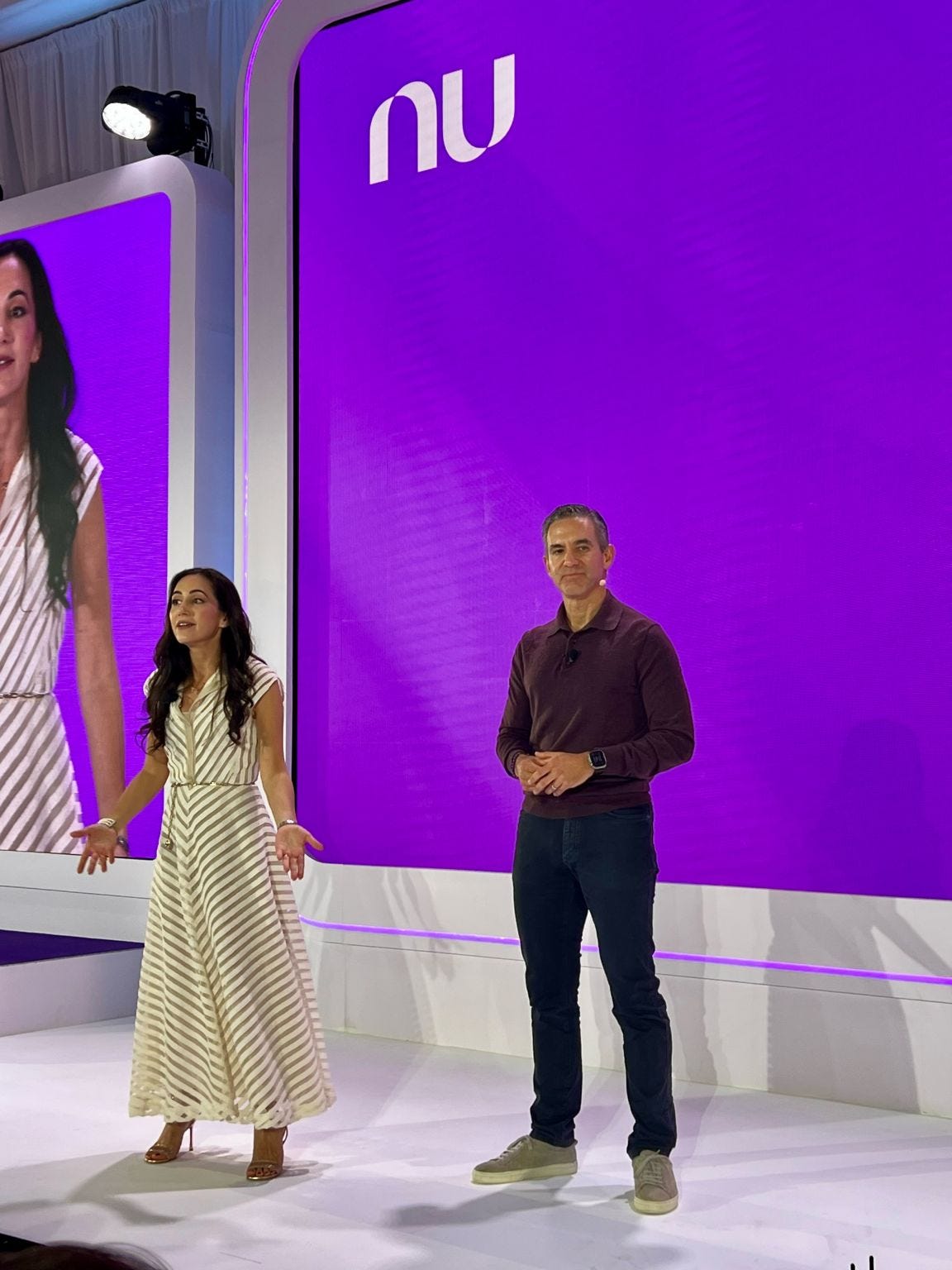
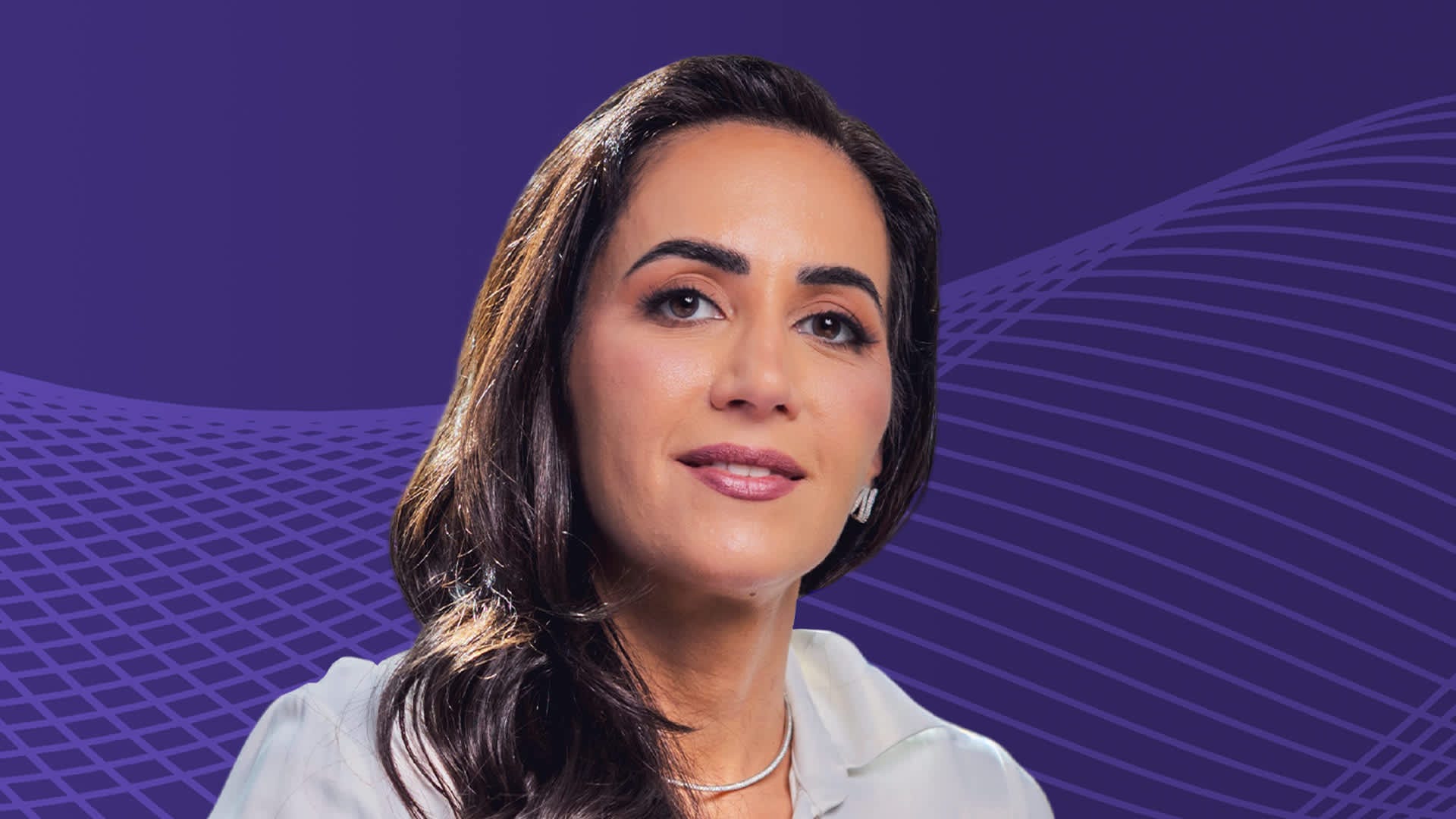
I sat down with Cristina Junqueira, Co-Founder of Nubank, at Nu Stadium in Miami, less than 24 hours after Nu officially launched in the United States.
Cristina co-founded Nu in 2013 with David Vélez and Edward Wible. She built the Brazilian business, which today counts roughly 64% of the country’s adults as customers, and later ran Brazil, Mexico, and Colombia before moving to the US about a year ago to lead the launch here. Nu is one of the very few fintechs anywhere that has reached bank scale with bank-beating efficiency, and it is now attempting something almost no Latin American company has pulled off: exporting a mainstream consumer financial brand into the US.
We discussed why a Brazilian neobank thinks the US mass affluent is underserved, why Nu tracks NPS ahead of customer growth, why paid acquisition in lending carries a hidden cost, what Walt Disney’s 1950s business diagram has to do with Nu’s org chart, and how she manages her time inside a company of roughly ten thousand people. I hope you enjoy this conversation as much as I did.



Why Nubank is Expanding to the US
Nu greenlit the US project about two years ago, after a year of studying the market, while Cristina was pregnant with her fourth child. But even with three years of preparation, an MBA from Kellogg, and a pre-Nu career at multinationals, her findings about the US market still surprised her.
Her own experience is probably the best summary of the thesis. She arrived as a private banking client with money on deposit and an existing mortgage at the same institution, yet the underwriting of her credit card took months. Once approved, the bank told her it could not issue the card without proof of residency. When she pointed out that the bank held her mortgage, the answer was that the mortgage team and the credit card team were different departments. Needless to say, her experience could have been far superior.
In the US, Nu will not chasing the top of the pyramid. The target is what Cristina calls the mass affluent: the upper slice of the US mass market, which she sizes at 50 to 60 million people. They earn a good living and hold savings, yet they don’t qualify for the premium cards and perks, they pay a steady stream of fees, and they earn little or nothing on their deposits. Nu’s pitch is to hand its cost advantage back to them as no fees and real yield.
For anyone building in US consumer, I thought there were three details in her answer worth highlighting:
Underwriting. Cristina was genuinely surprised by how many US institutions approve or decline on little more than a FICO threshold. The US has more consumer data than almost any market and, in her view, some of the least sophisticated use of it. Nu is building an AI-driven credit model trained on a very large set of features and unstructured data, and has spent 13 years tuning models in Brazil and Mexico. It will operate inside hard lines (fair lending rules and military lending protections are not up for debate), but the room between those lines and a FICO cutoff is where Nu expects to win. I often say the US is the deepest and biggest financial market, but not necessarily the most sophisticated. Cristina’s word was “lazy.”
Credit card economics. Mexico, now Nu’s second largest market, generates roughly twice the average revenue per account that Brazil did at the same stage. The reason is behavioral. In Brazil, very few people revolve on cards because rates are punishing, which feeds a loop of high delinquency and high rates. In Mexico, 60% to 70% of cardholders use cards for financing, at lower rates and lower losses, so Nu carries far more interest-bearing balances. Mexico was also less penetrated: about half of Nu’s approved Mexican customers were getting their first card, versus roughly 20% in Brazil. Cristina describes the US card market as much closer to Mexico than to Brazil. For investors modeling the US business, that comparison matters more than any customer count Nu reports in the first year.
Distribution. Nu’s first US customers will be the Brazilians, Mexicans, Colombians and Latinos living here who already bank with Nu at home and have been asking the company to come for years. That gives Nu a cold-start base of people who already trust the brand, which few new entrants in US banking have. That said, this is a beachhead and not the entire target market.
On timing, Nu chose to launch before receiving its full US bank charter. Roughly 500 people tested the account and credit card in stealth, and the team concluded it had learned what it could without a public launch. The charter remains a priority.
Customer Obsession and NPS Above Everything
I asked Cristina which KPIs she will watch during the US build. Public market investors will track customer growth, and Nu will report it, but she ranked it below NPS and satisfaction. Her logic: a smaller base that loves the product can be scaled later with capital, while a large base of indifferent customers who barely use the product is, in her words, “an empty shell.” Indifferent customers in a credit business are also expensive to carry.
Nu’s customer obsession is real and shows up in operating decisions. When I asked for the best product decision Nu ever made, she didn’t name a feature. She named the choice, early on, to treat customer support as part of the product instead of a cost center. Most banks staff support to minimize cost per contact. Nu staffed it to protect the experience, on the view that a great app means little if a customer who needs help is treated badly.
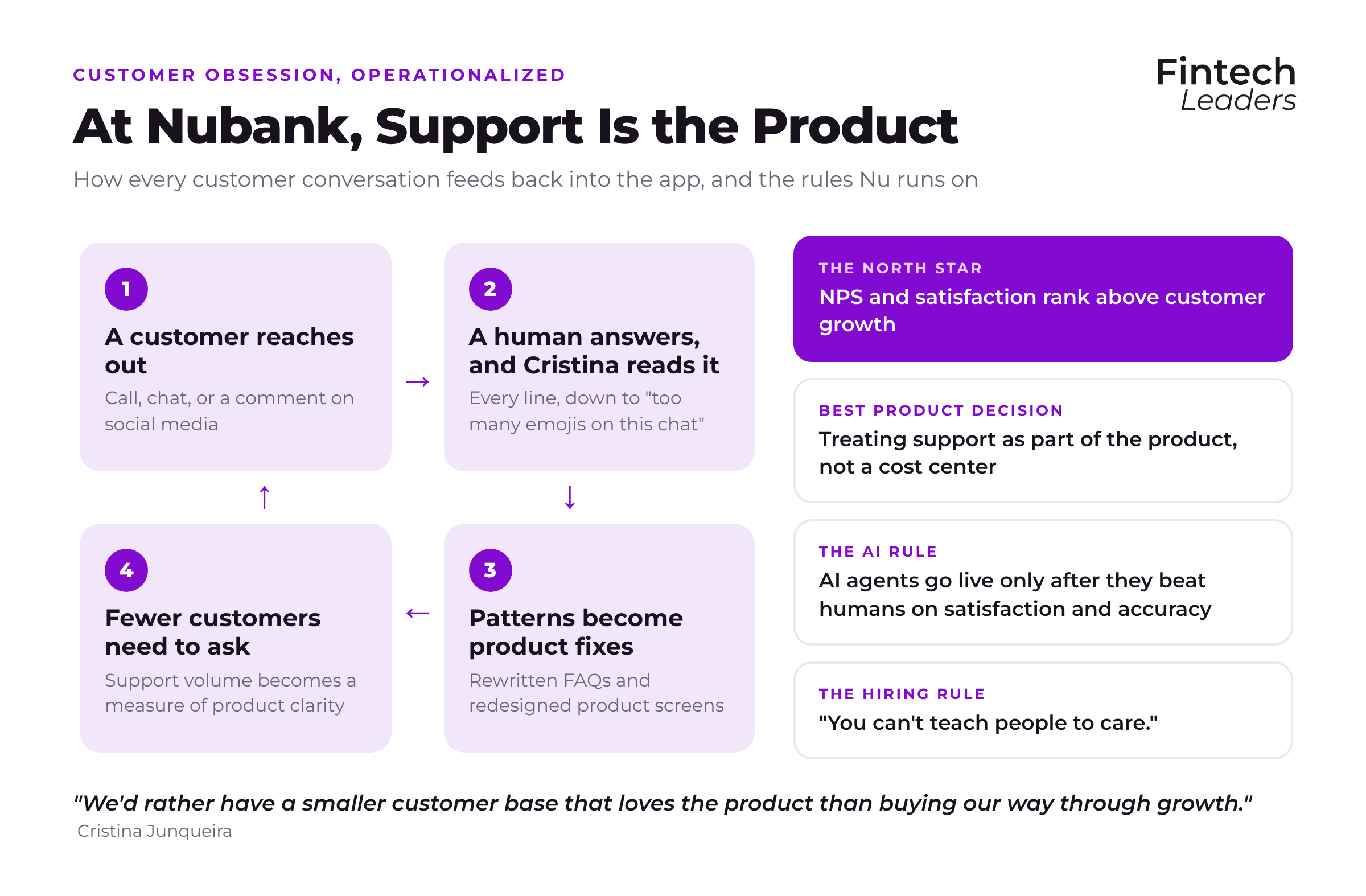
The same principle governs how Nu uses AI with customers. Roughly 60% of support interactions in Brazil are now handled by AI agents, but Nu only rolled them out after they had data and evidence that the AI agents were beating human agents on both satisfaction and accuracy in controlled tests. Cristina is direct that Nu never had a cost problem to solve; the goal was faster and more accurate answers, especially during demand peaks when human SLAs stretch. In the US there is no training data yet, so every conversation will be handled by human agents and heavily monitored. Her team knows she will be reading the customer service call transcripts, down to flagging a chat with too many emojis.
What happens with that reading, I think, every founder should also be doing. Support transcripts are treated as product research. Patterns in what customers ask feed directly into rewritten FAQs and redesigned product screens, so the next customer doesn’t need to ask. Support volume becomes a measure of product clarity, not just a staffing input.
There Is No Good Marketing That Resists a Bad Product
Roughly 80% of Nu’s customers in Brazil arrived through word of mouth, and CAC remains low across Brazil, Mexico, and Colombia. Nu still adds about a million Brazilian customers every other month, despite already serving close to two thirds of the adult population. Only now, as it begins to run out of Brazilians to sign up, is it leaning more into marketing at home.
Cristina’s capital allocation framing is simple. Every dollar spent making the product better, whether through waived fees or a smoother experience, is a dollar that customers will advertise for free. The alternative is underinvesting in the product and then spending heavily on media to, as she put it, “almost bribe customers” into trying it.
The more useful point for lending founders is about who paid acquisition brings in. Bottom-funnel performance marketing can buy growth, but in credit it skews toward the most credit-hungry and sometimes desperate applicants. The cost of that channel is not only the CAC on the dashboard; it shows up months later in the loss rate. Brand built through storytelling, content, and partnerships attracts a different customer and compounds as equity over time.
That is the logic behind the brand investments that look expensive from the outside: the naming rights to Nu Stadium, home of Inter Miami, and the partnership with the Mercedes F1 team (whose drivers Kimi Antonelli and George Russell raced the Miami Grand Prix in purple suits). Those are bets on the top of the funnel in a market where Nu needs millions of Americans to learn its name before they ever see an ad.
Cristina also had her entire US team read Play Bigger, the book on category design, ahead of launch. Nu isn’t positioning itself as a cheaper bank. It wants to define a category of banking for a segment that, according to Cristina, incumbents have treated as an afterthought.
What Walt Disney Taught Nubank About Building for a Century
Cristina is a self-described Disney superfan. In his memoir, Bob Iger describes Disney’s core target as mothers of children under 12. She has four children under 12, so she considers herself the bullseye.
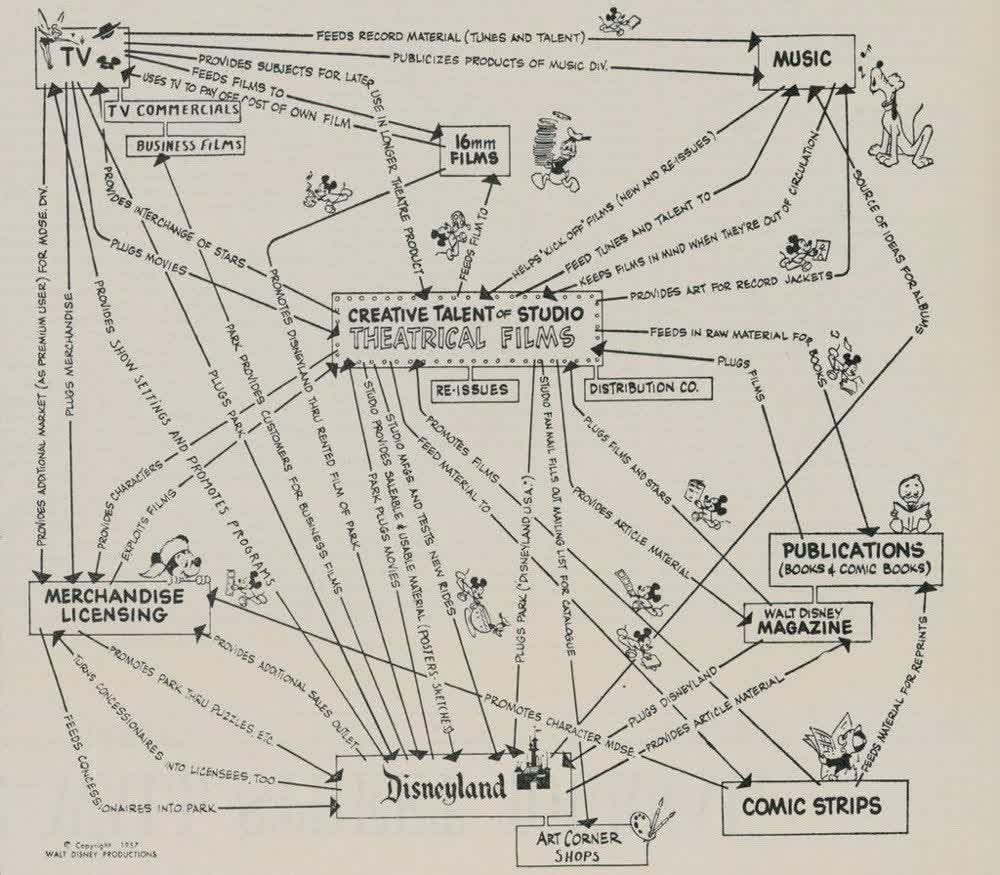
Her admiration is not only for the content, but for the business model. Frozen did not exist 15 years ago; today it is a multibillion-dollar franchise spanning sequels, merchandise, parks, and experiences. She points to the hand-drawn chart Walt Disney produced in the 1950s (see below), connecting films, merchandise, music, publishing, and parks, as possibly the first articulation of a business ecosystem, where each line of business feeds the others. Iger’s acquisitions of Pixar, Lucasfilm, and Marvel kept that engine supplied with IP. For a company that started with one credit card and now runs accounts, payments, credit, investments, and insurance, the parallel is not subtle.
The bigger lesson is time horizon. From the start, Cristina and David agreed they were building Nu to last 30, 40, 50, even 100 years. She says that makes some things harder and many things easier, because when you know the long-term answer, you stop relitigating short-term tradeoffs.
Organizational design is where she applies it most concretely. Her rule is that structure serves the company, never the other way around. When Nu had one product in one country, that was trivial. As product teams multiplied, the company caught itself shipping its org chart, and it reorganized around customers. Today Nu runs on three layers: market teams that own the customer and bring local demand into the company, global product teams that build the core of each product once for deployment across markets, and global platforms that build shared infrastructure. Strategy and hypotheses are supposed to originate in the markets.

Staying Fast at Ten Thousand People: AI-Built Features, Zero-Based Calendars, and No “Maybe” Hires
Cristina identifies Nu’s biggest constraint on expansion as internal execution capacity, not capital or demand. Much of how the company and she personally operate is designed around that bottleneck.
At the company level, the answer has been AI pointed at the highest-leverage problems. Nu acquired Hyperplane, a California AI startup that became the core of its AI team, and deployed those resources first on credit underwriting. Improving a credit model usually forces a choice between cutting losses and approving more applicants. Cristina says Nu has repeatedly done both at once. The second deployment was product development. Many features in the US launch shipped without an engineer writing a line of code. Engineers work heavily in tools like Cursor and Claude Code, and design, product, and research teams use AI as well. That is how a relatively small team shipped a new app, accounts, debit cards, remittances, and a credit card in the time it did. On build versus buy, Nu buys the best tools and negotiates hard, and reserves building for areas where it has a real edge.
At the personal level, the system is a calendar she treats as a budget. Recurring meetings, from standing one-on-ones to project check-ins, accumulate and outlive their purpose. At least every six months, often sooner, she deletes everything and rebuilds from zero: what are the new priorities, who joined the team, who is struggling, and which meetings are actually required.
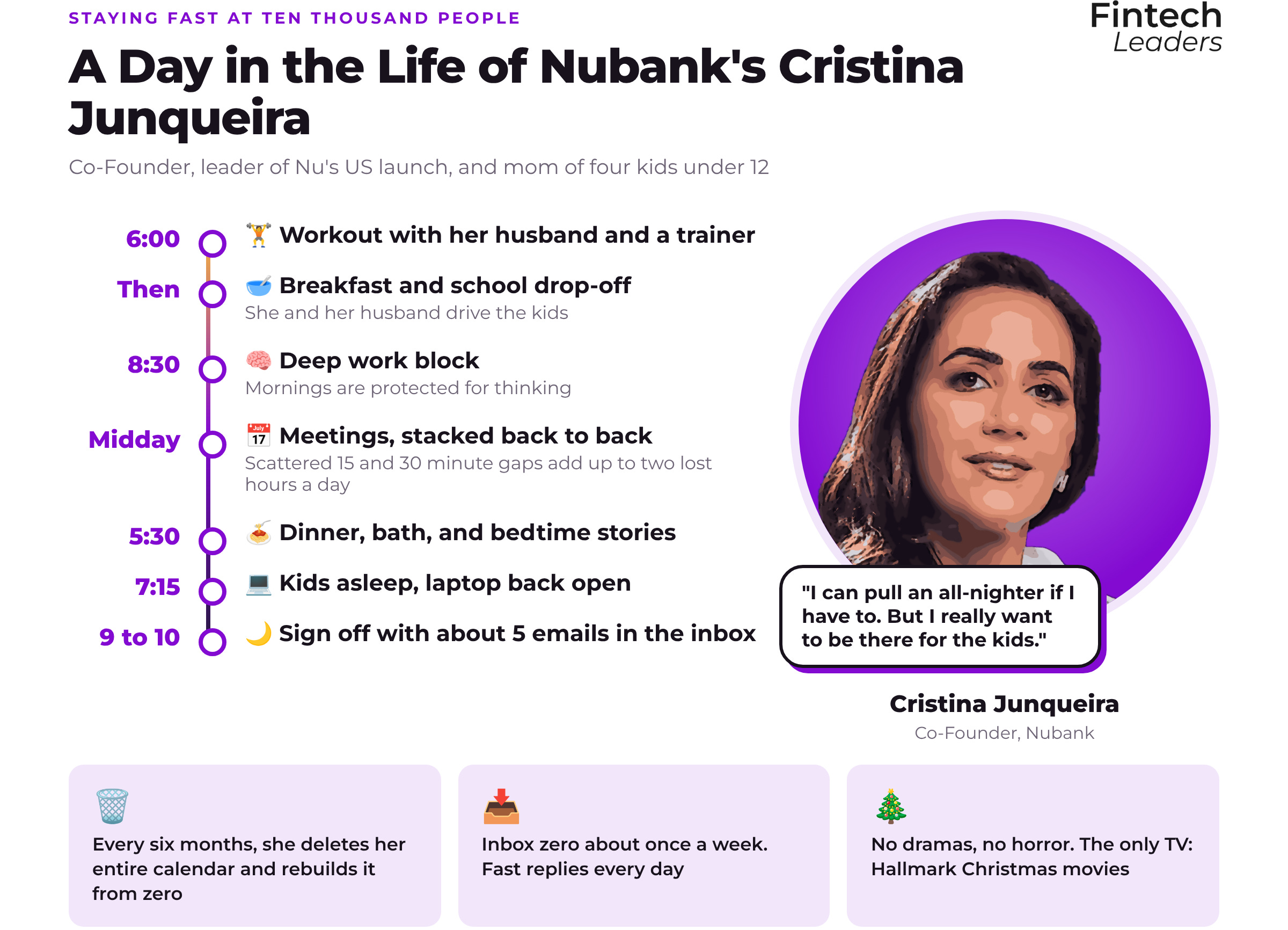
The day itself is tightly structured. She works out with her husband and a trainer at 6:00, drives the kids to school, and starts work around 8:30. Mornings are reserved for deep work; meetings are stacked back to back because scattered 15- and 30-minute gaps add up to about two lost hours a day. She is home by 5:30 for dinner and bedtime, and back online from about 7:15 until nine or ten. She goes to bed with roughly five emails in her inbox and gets to zero about once a week. She also protects her emotional bandwidth: she avoids most news and any drama involving illness or children, and the only thing she watches, when she watches anything, is a Hallmark Christmas movie.
Hiring is the last lever. Cristina has worked at BCG and other companies and says she has never seen higher talent density than at Nu, including in functions like collections, internal audit, and people and culture. Her hardest-won rule is to never hire the “maybe.” After a role sits open for months and 60 or 80 candidates have been interviewed, the merely acceptable one starts to look better in hindsight. She says she has made that hire more than once and has never seen it work.
Book Recommendations

How Will You Measure Your Life? by Clayton Christensen. The author of The Innovator’s Dilemma applies his business frameworks to careers, family and personal integrity. Cristina says this is the book that changed her life.
Clear Thinking by Shane Parrish, the founder of Farnam Street. The book argues that our worst decisions usually come from ordinary moments when emotion, ego or habit choose for us, not from the big calls. Lately Cristina tells “everyone that would breathe” to read it, for how much emotional intelligence it packs in. She thinks no one should graduate high school without it.
Play Bigger by Al Ramadan, Dave Peterson, Christopher Lochhead and Kevin Maney. It’s a playbook on how the most valuable companies create and own their categories instead of competing inside existing ones. Cristina had her entire US team read it ahead of the launch. If you’re building against entrenched incumbents, this one is directly relevant.
The Hard Thing About Hard Things by Ben Horowitz. It’s Horowitz’s account of running Opsware through near-death moments, and probably the most honest book on what being a CEO feels like when nothing is working. Cristina calls it a great one.


The Unfiltered Q&A with Cristina Junqueira
Miguel Armaza: I understand you’re a huge Disney fan, and also a huge Bob Iger fan. Why do you admire the company so much, and specifically the CEO, Bob Iger?
Cristina Junqueira: First, it’s very inspiring what Walt Disney was able to create out of thin air. I’ve always been amazed by how you take a whole franchise that is worth tens of billions of dollars on its own today. Frozen, for instance, didn’t exist 15 years ago. Somebody wrote a script, produced a movie, and here we are, 15 years later, producing Frozen three and Frozen four, billions and billions in franchise rights. Frozen Two was the largest animated movie ever when it came out. There’s so much that they were able to build into the ecosystem, starting with the IP, but then translating that into merchandise, parks and experiences, all the storytelling. In the movie business, the IP is just a starting point. There’s so much more that is interconnected, and so much that it brings out of people in terms of emotions. I’m a big fan of the brand, and I think storytelling and emotional connection is the way to build that. Disney is just a masterclass in that, so I’m a big fan, both as a business person and as a customer. Bob Iger, in his book, defines the bullseye target for the Walt Disney company: mothers of children under 12. I have four children under 12. So I’m a pretty big fan. I’m right there as their core target. And Bob is a phenomenal executive. His trajectory is so admirable. He was able to build so much. He has such great instincts with people, with business, with the acquisitions that he’s made. His vision was to continue to fuel the IP engine that would then cascade into all the different business models. Can you imagine what would have happened to Disney if it hadn’t acquired Pixar, or Star Wars and the whole Lucasfilm franchise, or Marvel? There’s so much that they’ve been able to do with those IPs.
Miguel Armaza: In my household, which is not a business family, Walt Disney was always associated with being a cartoonist, an entertainer for children. But he was also a great businessman and probably a visionary. Do you think the structure of Disney, what he did a century ago, set up the company for success? And do you think he would be surprised by how the company looks today?
Cristina Junqueira: I think some things would surprise him, but if you look back, Walt Disney might have been the first human to put out a diagram of a business ecosystem. You can look it up. There’s a chart that Walt Disney produced that has the IP and the merchandise and the parks, everything connected. It was one of the very first, if not the first ever, articulation of how different businesses feed off each other into a healthy business ecosystem and flywheel. So he was for sure a visionary. When people ask me who I would like to have dinner with, dead or alive, I always say Walt Disney, because I would love to ask him that question. I don’t think the scale and the impact of the company would surprise him. Maybe specific angles of it. But he was also a big believer in technology. There are so many quotes from Walt that touch on technology. One of my favorites is that the most advanced technology, the bleeding edge technology, is indistinguishable from magic. That’s why he liked to produce magic.

Miguel Armaza: You brought up organizational design. How do you think about it at Nu? I imagine it’s your vision that Nu will be around in a century, so that’s part of the inspiration too. What have you learned?
Cristina Junqueira: A lot of that comes from David. He’s the founder and CEO, and when we first started working together, we shared this very long term perspective. We really are building Nu for 30, 40, 50, 100 years, and that makes things harder in some ways, but very easy in others. When you’re thinking about the long term, you don’t get stuck on short term trade-offs, and you don’t doubt yourself when you know what the right thing to do is. Org structure is one of those things, because we’re very committed to not serving an org structure. The structure should serve the company, not the other way around. You worked at big companies before. You probably know how companies can be either addicted to a specific structure or enslaved by it. We try really hard not to do that. When we started Nubank, we only had one product, credit cards, and we only operated in one country, Brazil. But as we started spinning up different product teams to launch different products, at some point we found ourselves in a position where maybe we were shaping our org structure. And then we took a step back and said, no, no, no. We’ve got to reorganize ourselves around customers and the customer segment. So today we’re organized by market. I’m currently leading the U.S. market, which we just launched, but before that I was leading all three markets we were in: Brazil, Mexico, Colombia. We built those teams to bring the customer perspective into the org. Then we have global product teams building the foundation, the core structure of those products that we deploy across markets. And behind that, we have global platforms building the infrastructure that is cross product and cross market. But all that is in service of the customer and the market we’re serving. One of the internal jokes that I like to make is that no global product team or global platform team is serving Nubank Mars.
Miguel Armaza: It’s been about a year since you moved back to the U.S., and this time you came with a very specific mission of launching the U.S. operation, which happened yesterday. What surprised you the most over the last year?
Cristina Junqueira: So many things have surprised me, because I’ve always lived a fairly international life. I’ve been here for grad school, for business school. I worked in and out of the U.S., for multinational companies. My husband too. And I’ve always traveled a lot. So I kind of assumed I knew what I was going to find. We’ve also been studying the U.S. market for a while, even before I came. We greenlit the U.S. project about two years ago. I was pregnant with my fourth child, but we had been working on that business plan, studying the market, for a year before that. So it might be three years in the making at this stage, and I’m still blown away by all the bureaucracy and all the bad experience and all the fees and all the inefficiencies. It’s insane. I came here, I had good relationships with some of the best banks, on the private banking side even. You have no idea of the headache that it was for me to get a credit card here. I had money in the bank. I had a mortgage already. I had relationships. It took them months to even underwrite a credit card. And after they did, they had the guts to look me in the face and say, but we can’t really issue it because we don’t have proof of your residency. You have my mortgage. What more proof do you want? And they’re like, no, but that’s the mortgage people, we’re the credit card people. How, in 2026, are those big, very successful, fancy banks still operating that way? And if I’m a preferred customer and I’m getting that type of treatment, can you imagine what millions of customers are going through? So that has really surprised me. Just how hard everything is, how expensive it is, and the fees are everywhere. We had a good hypothesis that our products were going to be better than what customers were able to find, and we’re pretty confident that no one likes paying fees, and that people everywhere appreciate that their money isn’t sitting idle. But the pain might be more acute than we expected.
Miguel Armaza: Help us understand how you’re positioning Nu in the U.S., and maybe contrast that with how you positioned it back in Brazil.
Cristina Junqueira: It’s easy, especially for your audience, or executives, or people in the industry, to look at us and say, I’m pretty well treated by my bank, I have a fancy credit card, I have access to fancy investments. That’s all true, but that’s not the reality. The U.S. is a huge country, over 300 million people. It’s true that the higher income you are, the better treated you are. So we’re not going to be trying to address that segment. But when you look at the mass market of the U.S., which is 150 million people, maybe the top 20, 25 percent of that market, the mass affluent segment as we call it, that’s 50, 60 million people. Those people are very poorly served, because they make a good living, they have savings, they wish they were better treated, but they’re not. They don’t have access to the fancy metal cards. They don’t have access to all those benefits. They’re paying very high fees. They don’t have access to a good savings account, to high yield on their accounts. They’re locked out of all that. So sure, they do have a bank account, they do have a credit card, but it’s nowhere near as good as it could be and as it should be. With our technology and our cost structure, we are able to serve them much better. We’re able to pass all those efficiencies, all that lean cost structure, in the form of no fees, and we’re going to be paying them for their money. We’re not going to be making them a big favor of taking their money. We’re actually going to work really hard to earn their business, and we’re going to offer them the best customer experience out there. At the same time, the first people who are going to come, obviously, are the people who know us. There are Brazilians, Mexicans, and Colombians in the U.S. who grew up with us in those countries and then moved here for work, for school, for family, and then they’re left with the bureaucracy they find here. We’ve been hearing that for years now, customers asking us to come. We have anywhere between half a million and three to five million people, depending on how you slice the data, of Nu customers from Brazil and Mexico here in the U.S. who already know us and are eager to bank with us. We know they’re going to come first, but they’re not the only ones we’re hoping to attract.
Miguel Armaza: What is your approach to building the brand? In Brazil, correct me if I’m wrong, about 80% of your customers came from word of mouth, with extremely low CAC.
Cristina Junqueira: Yes, and to this day we have very low CAC, including in Brazil, Mexico, and Colombia. Now we’re starting to do a little bit more marketing, especially in Brazil, because we’re almost running out of Brazilians to a certain degree. We have 120 million people already. 64% of the adult population in Brazil is a customer, and we’re still seeing about a million customers coming in every other month. So there’s a lot that we’re still seeing in terms of growth. But obviously, the bigger you get, it gets a little harder at the margin. The approach we had in the beginning in Brazil is similar to what we’re going to do here. First and foremost, we want people to love the product, because if they love the product, if we have very high NPS, they’re just going to talk about it. They’re going to share it with their friends and their family. That’s the best marketing we can possibly do. I’d much rather invest more in the product in the form of no fees, in the form of a better experience, and have that speak for itself and have customers do the word of mouth thing, versus not invest enough in the product and then have to pay a lot of media and almost bribe customers into trying the product.
Miguel Armaza: So product-led growth is a necessity.
Cristina Junqueira: It’s a must. It’s a must. There’s no good marketing that resists bad product. That’s the foundation. The second thing is we want to be super consistent. It’s not just the product, it’s every single touchpoint the customer has. So customer support needs to be phenomenal. We launched yesterday. What did I do the whole night? I was reading through all the transcripts from calls and chats that came in yesterday while I was here at the event, and I’m going to continue to do that until my arms fall off. Because I want to know what customers are saying. I want to know how they’re feeling. I read through all the social media comments. I want to have that sensibility of reacting to the language they’re using and how they’re experiencing the product, and iterate very fast. And then, of course, we’re here at Nu Stadium. This was a big investment that we made, as well as the F1 team. We’re partners with the Mercedes F1 team, which has been having a phenomenal season that we’re very grateful for. If you start directly with the paid marketing, bottom funnel, conversion type of stuff, that doesn’t build a brand. That can buy you growth, but it’s also a little bit of adverse selection, because you’re going to get people who are credit hungry, people who are kind of desperate. Whereas if you build the brand through storytelling, through content, through some of those nice partnerships, you’re building a lot of equity, and that is the thing that compounds over time.
Miguel Armaza: You’ve publicly said you’ll invest no more than 100 basis points of your efficiency ratio, and that you’ll give it 12 to 30 months. What are the KPIs you’re going to be tracking most closely during this period?
Cristina Junqueira: There will be a lot of eyes on growth in the size of our customer base. We’re going to be tracking that, but I would argue that’s less important. What we really want to be tracking and building towards is high NPS and high satisfaction rates. We’d rather have a smaller customer base that loves the product than buy our way through growth by having customers who are indifferent, who don’t really use the product, who definitely don’t love the product. We want to make sure that we get the foundation right on that customer love, because if you get there, then growing is a matter of time. Then you can invest and accelerate. But if you don’t, then it’s a little bit of an empty shell around growth.
Miguel Armaza: Mexico is your second largest market right now, and if you look at the average revenue per account, it’s twice as high as it was in Brazil at the same period. What does that tell us about Mexico?
Cristina Junqueira: Mexico is a very different market than Brazil. Let’s start with credit cards, because that’s where the biggest part of the difference comes from. In Brazil, very few people actually revolve on credit cards because interest rates are very high, and that’s a bit of a doom loop. Delinquency rates are high, then interest rates have to be high because the losses are high, and people have a hard time coming out of revolving. The credit card market in Mexico is much closer to what we see in the U.S., where 60 to 70% of people actually use credit cards for financing, so that allows a much healthier profile of that type of credit. Interest rates are much lower. Delinquency rates are also lower. So that allows us to have much higher interest-bearing balances in Mexico. When we came into Mexico, we knew the unit economics were going to be better than Brazil for that reason. And you add to that the fact that Mexico was much more underpenetrated on the credit side than Brazil was. In Brazil, out of 100 customers that we would approve, 20% of them didn’t have a credit card. The other 80 already had one. In Mexico, that number is closer to 50-50. So there’s a much bigger opportunity for us to grow the pie, to grow the whole of the market, and to bring people into the industry who didn’t have access before. All that adds up and compounds to revenue and margins per customer being better.

Miguel Armaza: The U.S. is a market that has a lot of data, but it has more data restrictions than, say, Brazil. How does that change your underwriting approach for the U.S. operation?
Cristina Junqueira: First, we always have to start from hard lines. There are regulations. There’s the Fair Lending Act. There’s a bunch of specific regulations with regard to the military. All those are the hard boundaries. There’s no conversation. We operate multiple regulated entities across multiple jurisdictions, and compliance is non-negotiable. Having said that, something else that just blows my mind about the U.S. is how so many financial institutions just rely on FICO scores. That’s all they do. They’re like, oh, if you have a FICO score above X, here you go. Oh my God, how? At the same time, two things are true: there’s a lot of data, and there’s a lot of very simplistic underwriting. So that’s the opportunity for a company like us. Of course we’re going to have access to the FICO scores, but we have not just the technology and the data infrastructure, but also the experience, 13 years of experience, and the talent and the culture, to be able to leverage all that data into way better models. That is an opportunity that is so exciting for us.
Miguel Armaza: Your agents on the customer service side are handling about 60% of your claims. David has joined the board of OpenAI. But yesterday at the event, I didn’t hear much about AI. What else can we expect from Nu on the AI front?
Cristina Junqueira: We are probably in the top 10%, if not higher, in terms of companies leaning into AI very heavily. I think the difference is where we’re deploying those resources. We have extremely strong AI capabilities in the company. We are hiring a lot of talent. We made an acquisition in California of a company called Hyperplane that has been the center of our AI core team, and we’ve been growing and acquiring talent everywhere. But we chose to deploy those capabilities where we saw the highest leverage. First, it was credit underwriting, what we were able to do initially in Brazil and are now exporting into Mexico and into other lines of the business. Usually in credit underwriting, when you improve a model, you’ve got to make a choice: either you reduce the delinquency rates, you reduce the losses, or you approve more people. We’ve been able to consistently do a lot of both, which is unheard of. The second thing is that our biggest bottleneck for continued expansion is internal capacity, execution capacity. So the second place where we deployed a lot of AI resources was accelerating product development. For the product that we’re launching here in the U.S., many features were deployed without any engineers touching a line of code. It was all AI. All our engineers are heavy users of every tool, Cursor, Claude Code, you name it. Even design teams and product teams, even research. That has accelerated product development by a lot. That’s the reason we’re able to deploy so many products. If you think about it, there’s the deposit account, debit cards, remittances, the credit card, a whole new app. All that was built in record time with a much smaller team. On AI in Brazil, because we have such a long history of data and a way to train our models, we were testing at a smaller scale, and only when we saw results from AI that had higher satisfaction levels and higher accuracy levels than humans, that was when we started to deploy. A lot of people look at AI in customer-facing applications with cost savings in mind, but we were already very efficient on the cost side. We didn’t have a cost structure problem. So we’re really looking at AI as a way to improve quality, to answer our customers faster and more accurately, because humans make mistakes too, especially when you have peaks of demand. The way I like to think about it in customer-facing applications is, how can AI make the experience better, not just the cost lower? In the U.S. we are not starting with any AI agents answering customers. We don’t have any data to train them on, so it’s all human in the beginning, and all very heavily monitored. The whole team answering customers today, they know I’m watching, they know I’m reading every line that they write, and I’m like, you shouldn’t have said that, you used too many emojis on this chat. That’s the level of feedback we’re giving them on tone.
Miguel Armaza: What have you learned about hiring? Nu today has thousands of employees all over the world. What have you learned about bringing on the talent you need?
Cristina Junqueira: You could think I’m biased, but I was a consultant before. I worked at BCG for many years. I have lots of friends at different companies. I worked at other companies before starting Nubank with David. So we know what the world out there looks like, and I have never seen a company that has a higher talent density than Nubank. It’s not just the product team or the tech team or the finance team. It’s everywhere. Our people and culture team, our collections team, our internal auditors. Everywhere, people are just so freaking good. That comes from a variety of things. First is the right culture. The right culture will either attract the best people or repel the best people. If you don’t run a company that great people would be attracted to, that they would be engaged to work with, you’re not going to get them. They’re just going to go. Great people have options. You need to be the company that those great people want to work for, because there’s no money in the world that’ll buy phenomenal talent to come and work for a shitty company. It’s like a relationship. People will struggle to find somebody who is great, but if they’re not great, why would they expect that someone great would settle for them? The second thing is, I’ve made the mistake painfully, not just once, not just twice, too many times, but I’ve learned my lesson on not giving it a shot with that person who did well but you’re not really sure about. It never paid off. Never. I’m yet to see one example of that working. Sometimes you have a role that’s been open for months, and you’ve interviewed 60, 70, 80 candidates and you’re yet to find somebody great, and then you look back and think, well, maybe that person wasn’t that bad, maybe we should give them a shot. It never works. You really have to have a very, very high bar as you hire. And the third thing is you’ve really got to test. For us, two things have really paid off. First, case interviews, where we have an opportunity to see the person role play a little bit and see how they work, how they think, how they react. We try to simulate a work meeting with a topic we have to address, and we ask them to prepare something just to get the conversation started, and then we learn about how they think, how they approach problems, how creative they are, how they react to feedback, how they push back or don’t. The other thing is to look for evidence of values alignment, because you can teach people almost anything, but you can’t teach them to care. If a person comes into Nubank and they don’t care a lot about customers, if they think customers are the thing that gets in the way of what we do, it’s not going to work. You’re not going to teach them how to care.
Miguel Armaza: Is it true that you rebuild your calendar every six months?
Cristina Junqueira: Sometimes even sooner. Here’s the thing: it’s very easy for meetings to pile up, especially recurring ones. Let’s set up a recurring one-on-one. Let’s set up a check-in on this project or that initiative. Those things can be necessary at that moment, but then a couple of months in, things have progressed, they’re going well, and you don’t need those anymore. But if you’re not disciplined about it, half of your calendar is taken by those. So what I try to do, at least once every six months but often sooner, is just delete everything and do a zero-based calendar. Okay, so what are my priorities now? Who has joined the organization? Who’s new on my team? Who’s struggling? Who isn’t? What should I be spending time on? Which meetings can I not join anymore? One big shift was when I started focusing on the U.S. When my last baby was born, I handed over Mexico and Colombia to the other executives, and I was only focused on the U.S. But I was still on the board of Mexico. And I was like, no, I want out of everything, because I want to be able to focus on this thing that I need to build. It’s very easy to lose sight of those things. That used to be my team, and they also kind of want to be around, and I wanted to be there for them too. But you’ve got to make choices. Being focused isn’t about saying yes to some things. It’s about saying no to a lot of other things. So I try to be very disciplined about that.
This interview has been edited and condensed for clarity.


Want more podcast episodes? Join me and follow Fintech Leaders today on Apple, Spotify, Youtube or your favorite podcast app for weekly conversations with today’s global leaders that will dominate the 21st century in fintech, business, and beyond.
Don’t forget to subscribe so you don’t miss big conversations and insights with the giants of Fintech.